


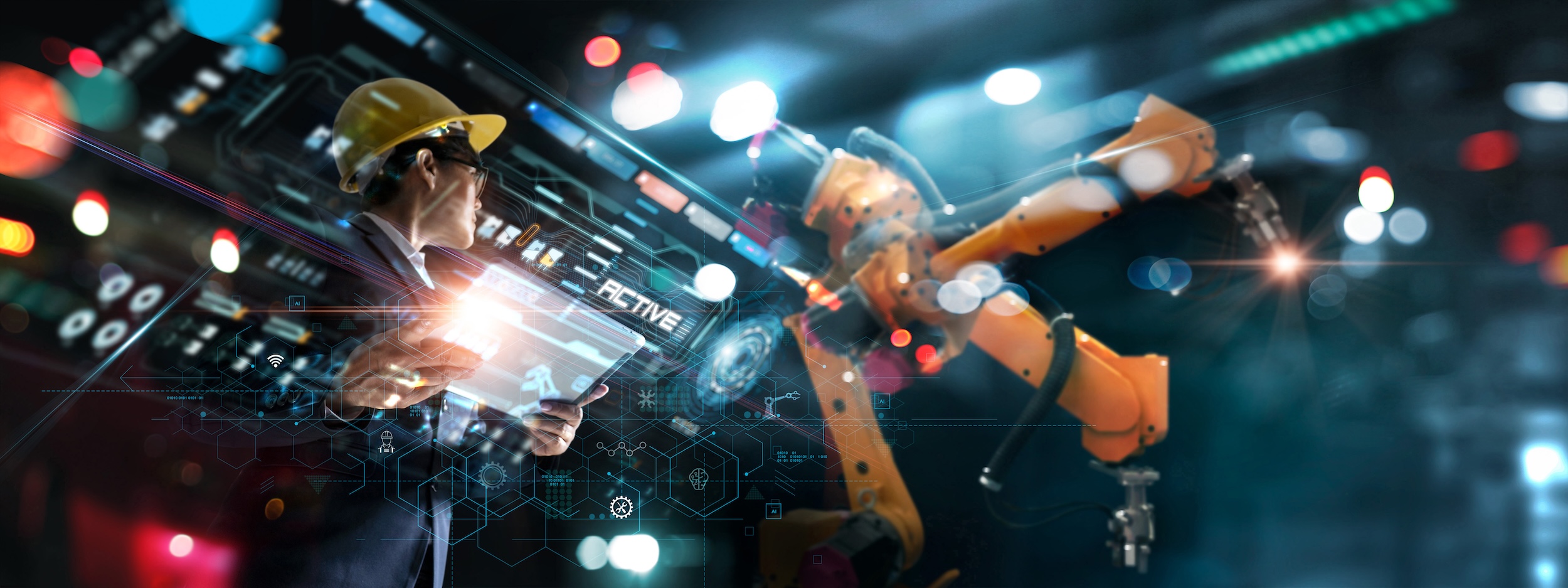


Image processing is a central element of modern industrial processes. It automates quality control, enables end-to-end traceability, and speeds up production workflows. With increasing digitalization and networking of machines, intelligent image recognition systems are becoming more important. This guide provides a solid introduction to industrial image processing and shows how companies can benefit from high-performance vision systems.
Quick Overview
- Automation: Image processing automates visual inspection tasks, improving quality, efficiency, and traceability.
- Application Range: From quality control to process monitoring – applicable across industries.
- System Components: Modern systems combine cameras, optics, lighting, and intelligent software – increasingly with AI.
- Added Value: Greater process reliability, fewer errors, better scalability, and data-driven optimization.
- Outlook: Future trends like deep learning, edge computing, and modular scalability of vision systems are continuously expanding the possibilities.
- What is Industrial Image Processing?
- Applications of Industrial Image Processing
- Technological Foundations of Image Processing
- Advantages of Industrial Image Processing
- Challenges and Limitations
- Trends and Future of Industrial Image Processing
- Conclusion: Why Industrial Image Processing Pays Off for Industrial Companies
- FAQs on Image Processing
What is Industrial Image Processing?
Industrial image processing refers to the automated evaluation of image data in industrial environments. The goal is to extract relevant information from images using cameras, vision computers, and software – and use it for process control or quality assurance. Unlike scientific image processing, the focus here is on robust, fast, and reliable application in real-world production.
Typical components include lighting, camera, optics, processing unit, and suitable software – working together to capture, analyze, and communicate visual data with the rest of the automation system.
Find the right vision hardware for your application – compact, powerful, and individually configurable. Discover the IMAGO Technologies product range.
Discover our systems
Find the right vision hardware for your application – compact, powerful, and individually configurable. Discover the IMAGO Technologies product range.
Applications of Industrial Image Processing
Used across all industries, applications are as diverse as industrial requirements themselves. Whether food, packaging, or printing – visual inspection systems adapt to sector-specific conditions and ensure reliable quality assurance at high speeds.
Quality Control and Defect Detection
Image processing ensures products are manufactured exactly to specification. Surface defects, deviations in shape, color, or size are detected and sorted out – fast and repeatable, even with complex parts.
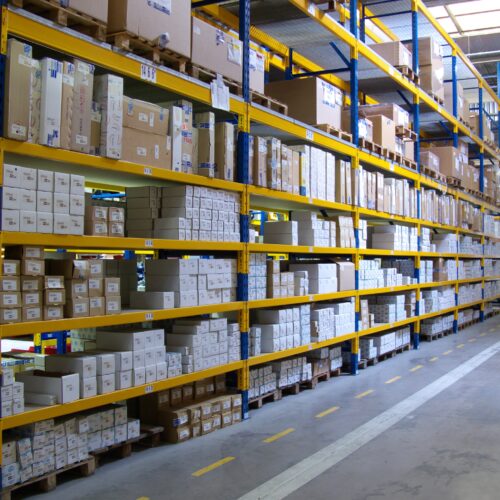
In logistics, entire pallets can be captured with just one camera, reading multiple codes in one image. In electronics, defective solder joints on circuit boards can be detected at millimeter level, reducing scrap and improving safety.
Position and Orientation Control
High-speed production demands precise product placement. Vision systems detect orientation and alignment to guide robots or assembly systems – minimizing downtime and improving quality.
Example: In packaging, cameras detect not just the presence of a product, but also its orientation – allowing precise label placement or correct cap alignment.
Identification and Traceability (Track & Trace)
Whether barcodes, data matrix codes, or printed text – image processing reliably reads and evaluates product markings. This is indispensable in logistics and serialization.
Especially in pharmaceuticals, where serial numbers and batch codes ensure tr/image-processing-software/aceability, OCR is increasingly replacing manual inspection – even under poor lighting or on damaged labels.
Presence, Completeness & Sorting
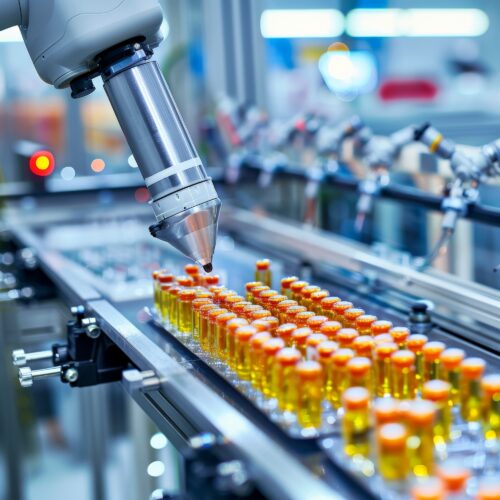
Vision systems verify that parts and products are fully and correctly assembled or sorted. By recognizing the smallest details, cameras automatically check whether all components are present, a product is complete or has been correctly sorted – even at high cycle rates.
For example, systems reliably detect whether a cap is on a bottle, a screw is correctly mounted, or if all units – such as chocolates or tablets – are present in a package. At the same time, image processing enables the automatic sorting of products by size, color, shape, or quality—ideal for automating complex processes with a minimal error rate.
Technological Foundations of Image Processing
Effective vision systems rely on the interaction of various components. Their selection and integration determine the overall system’s quality and performance.
Camera Technology
Industrial cameras differ in resolution, frame rate, sensor type (e.g. matrix, line scan, SWIR, 3D, X-ray), and interface (e.g. 5GigE, Camera Link, USB). Depending on the application, color or monochrome cameras are used. Increasingly, smart cameras with integrated processing are gaining importance.
For high-speed tasks like can inspection or fast conveyor monitoring, modern cameras achieve frame rates exceeding 1,000 frames per second at high resolution. New sensor generations also support low-light inspection without additional lighting.
Lighting & Optics
Lighting is critical for image quality. LED technology offers diverse options. Lighting type and angle are tailored specifically to the object. High-quality lenses ensure sharp, distortion-free images.
Special lighting techniques, such as dark field, backlight, or coaxial illumination, can be used to specifically highlight certain defects. In combination with polarizing filters, reflections can be reduced and image contrasts optimized – an important factor, especially with shiny or transparent materials.
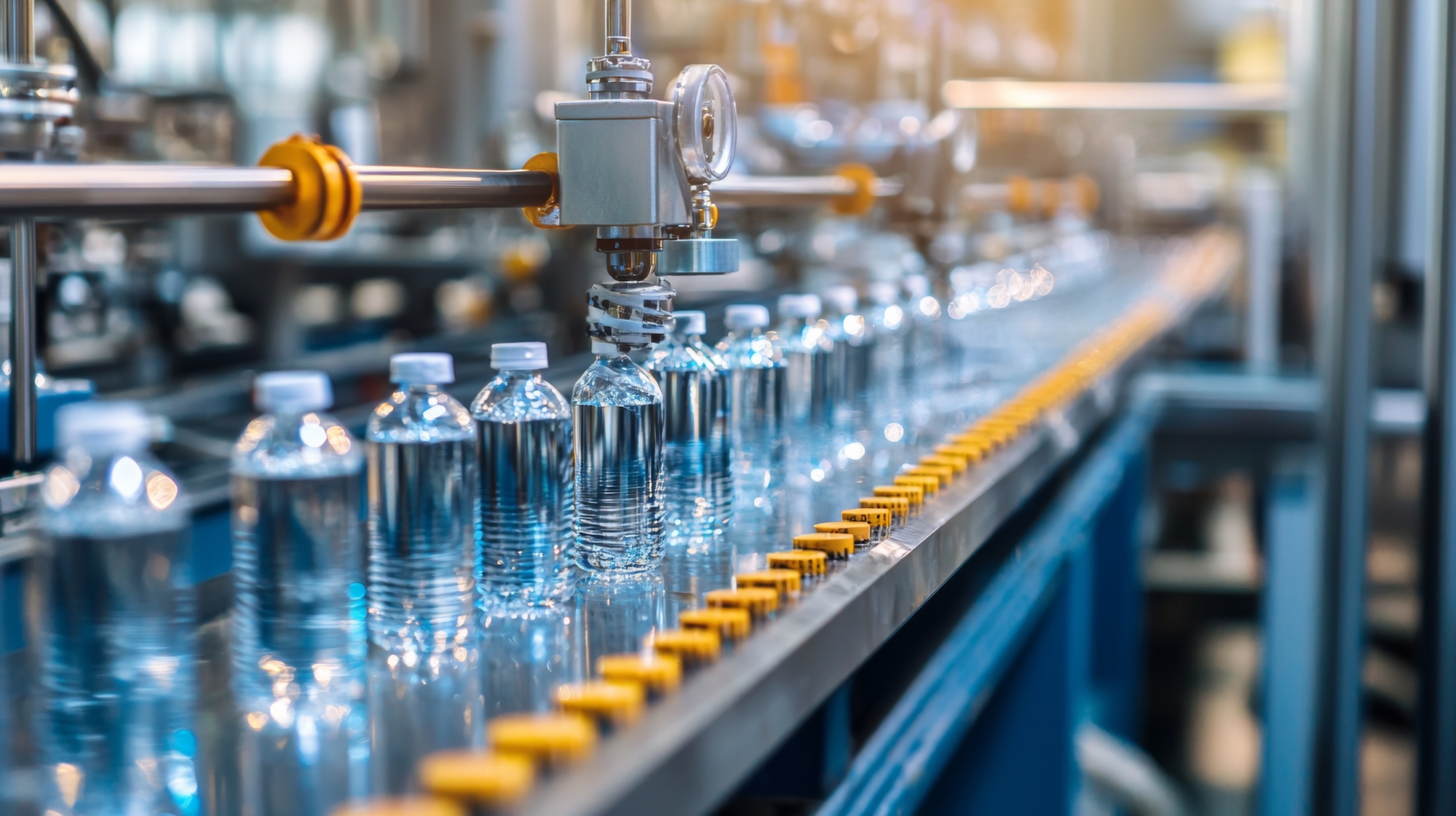
Image Processing Software
Modern image processing software, in addition to classic algorithms (e.g., edge detection or pattern matching), increasingly offers AI-powered methods like Deep Learning. These are particularly helpful for varying defect patterns or complex tasks. Intuitive user interfaces also simplify integration and maintenance.
Libraries such as HALCON or OpenCV are frequently used, offering a wide range of functions — from blob analysis and morphology to texture recognition. AI models enable reliable detection, even when materials or packaging designs vary.
Blob Analysis
Blob analysis identifies contiguous pixel regions in an image, known as “blobs.” For example, it helps with counting objects, measuring areas, or detecting defects based on geometric features.
Embedded Vision and Edge Computing
Increasingly, tasks are being processed directly at the data source rather than centrally. Embedded vision systems combine the camera and processing unit into a single, compact device. This approach helps to reduce latencies and save costs.
These systems are particularly well-suited for applications with limited installation space or where real-time data is needed without network delays. Examples include autonomous transport systems, mobile robots, or networked production cells.
Edge Computing
Beim Edge Computing findet die Datenverarbeitung direkt am Ort der Datenerfassung statt – etwa in der Kamera oder einem lokalen Gerät. Die Vorteile: geringe Latenz, reduzierte Datenlast und höhere Ausfallsicherheit bei instabiler Netzverbindung.
Advantages of Industrial Image Processing
The implementation of image processing offers industrial companies a multitude of economic and qualitative benefits. These range from precise quality assurance and process optimization to flexible adaptation to changing market demands. The following aspects highlight the central importance of visual inspection systems for modern production environments:
Enhanced Process Reliability |
Image processing systems allow for consistent and objective monitoring, free from human fatigue or subjective perception. This ensures that every product meets the required quality standards. Even the smallest defects or deviations are reliably detected, even at high throughput rates. |
Increased Efficiency |
Visual inspection systems reduce downtime and boost production speed. Automated defect detection significantly lowers scrap rates. Furthermore, captured image data provides valuable insights for optimizing production parameters. |
Flexibility and Scalability |
Thanks to modular system architecture and standardized interfaces, image processing solutions can be quickly adapted to new requirements. This makes them especially suitable for changing product variants or smaller batch sizes—an advantage in customized manufacturing or frequent product changes, for example. |
Data-Driven Process Improvement |
Systematic analysis of inspection data makes it possible to identify patterns and root causes of errors. Based on this information, processes can be continuously improved, extending to predictive maintenance. |
Resource Savings |
By reducing scrap and rework, material and energy costs can be lowered. Simultaneously, resource utilization is more efficiently managed, leading to both economic and ecological benefits. |
Challenges and Limitations
Despite all the advantages, implementing image processing also comes with challenges. Poor lighting conditions, highly variable surfaces, or demanding environmental requirements can push systems to their limits. Furthermore, selecting and configuring the components is complex and requires experience.
Particularly with complex inspection features—such as on textured, reflective, or transparent materials—inspection algorithms must be designed to be especially robust.
Trends and Future of Industrial Image Processing
Technological advancements and the increasing demand for automation are driving the evolution of image processing. Companies are increasingly seeking solutions that are not only powerful but also adaptable, cost-effective, and scalable. The following developments are significantly shaping the market now and in the future:
Artificial Intelligence and Deep Learning
Machine learning methods make image processing systems more flexible, more tolerant of disruptive factors, and capable of learning. They are especially used where classic rule-based algorithms fail due to high variance in the inspection object or unpredictable defect patterns. Instead of rigid specifications, neural networks recognize whether a component is acceptable or not based on learned structures.
Neural networks eliminate the need for manual definition of visual features. Instead, the system learns from examples and independently develops decision-making structures. This is particularly advantageous for products with high tolerances or natural material fluctuations—for example, products that exhibit natural variations. This includes, for instance, apples in the food industry, materials in wood processing, or recycled materials.
Another advantage: Deep learning models can be retrained later. This allows them to improve with every new sample. Combined with an active defect database and annotation tools, a continuously learning system emerges that responds to changing conditions.
Democratization of Image Processing: Smart AI Cameras for Everyone
A key trend in image processing is the increasing user-friendliness of powerful systems. Smart AI cameras particularly embody this development. They open up new possibilities for users who previously had little experience with image processing but still want to benefit from AI-powered inspection solutions.
Thanks to pre-trained models, intuitive user interfaces, and simple integration options, the entry barrier is significantly lowered. Users can train a classification or detect anomalies with just a few images—all without programming skills or deep technical know-how.
This democratization of image processing is an important step towards greater digitization in small and medium-sized businesses and a clear future trend in the industry.
From Hardware Components to Complete Solutions: System Thinking in Industrial Image Processing
A clear trend in image processing is the shift from merely selling components to providing comprehensive system solutions. Increasingly, users don’t just want individual parts; they want fully functional overall concepts that are precisely tailored to their specific application. This demands profound application knowledge and extensive experience in combining cameras, optics, lighting, and software.
Instead of just supplying hardware, experts are increasingly offering cross-technology consultation—for instance, on selecting optimal lenses, integrating suitable light sources, or choosing appropriate data connections. The goal is to deliver an image processing solution that not only functions technically but also operates reliably and reproducibly within the production environment.
This holistic approach not only shortens commissioning times but also significantly increases the success rate of implementation. Customers benefit from clear recommendations, minimized interfaces, and a system architecture from a single source—a crucial advantage in times of complex processes and growing automation demands. The future of image processing is, therefore, not modular, but integrated.
Increase Productivity
Rely on scalable image processing solutions that combine precision, efficiency, and future-readiness. IMAGO provides the technology for your automation strategy.
Why Industrial Image Processing Pays Off for Industrial Companies
Industrial image processing is the key to intelligent, efficient, and future-proof production. If you want to automate quality assurance, traceability, and process optimization, there’s no getting around powerful industrial image processing. Today, these technologies are more mature, flexible, and affordable than ever. Especially given the increasing shortage of skilled labor, image processing offers industrial companies an opportunity to sustainably improve production processes.
FAQs on Image Processing
How complex is the integration into existing production facilities?
Integrating image processing systems into existing facilities is technically feasible but requires careful planning. Adapting to the existing mechanics, software, and production environment is crucial. The effort can vary depending on the complexity of the inspection task and the need for interfaces—pilot projects help to minimize risks and costs beforehand.
What kinds of defects can image processing detect?
Image processing can detect a wide variety of defects: from surface scratches, shape deviations, and dimensional tolerances to color defects, incorrect labels, or faulty solder joints. Even invisible defects, for example, through 3D analysis or infrared technology, can be identified. The key is choosing the right sensors and software strategy.
What is Machine Vision?
“Machine Vision” is another term for image processing and refers to the algorithmic analysis of image data. In an industrial context, this means cameras capture visual information, and software analyzes it to make decisions—for example, about an object’s quality or position. The goal is to feed these insights back into production in an automated way.