


Ensure traceability, process reliability, and high throughput – identify codes, shipments, and material flows reliably at full conveyor speed. Freely programmable or available as a turnkey solution.
Machine Vision for Logistics

Typical Challenges in Logistics
01
High Throughput and Real-Time Performance
Conveyor systems process thousands of packages, containers, and load carriers every hour. This requires high-speed image processing and ultra-fast response times.
02
Damaged or Difficult-to-Read Labels
Dirty, damaged, or poorly positioned codes make it challenging to reliably read barcodes and shipping labels.
03
Traceability and Process Reliability
Missing identification or sorting errors can lead to delays, manual searches, and additional operational costs.
04
Wide Variety of Objects
Different package sizes, containers, and load carriers require flexible inspection and identification systems.
Our Approaches
Two Paths to the Right Vision Solution
Depending on your integration requirements and project timeline, IMAGO offers two distinct approaches to machine vision in logistics.
Open Plattform
Flexible Vision Platform
For OEMs (logistics equipment manufacturers) and logistics operators who require full control over logic, integration, and scalability.
- Freely programmable with the IMAGO ViewIT software framework, C++, Python, and HALCON – no black box, full control
- Multiple inspection tasks on a single device – for example reading expiration dates and inspecting seal integrity
- Portable across all IMAGO devices, with OPC UA and REST connectivity for Industry 4.0 integration
- Long-term availability, including ODM (Original Design Manufacturer) variants for serial machine production
Ready to use
Preconfigured Solution
For users with a specific inspection challenge who need fast and reliable results without extensive in-house development.
- Deep-learning inspection of visually variable parcels and logistics objects without programming using a web-based GUI
- Fast deployment with minimal lead time and a clear focus on rapid time-to-market
- Reliably detects anomalies and natural product variations in shape, color, and surface appearance
- Consulting and support from the experienced IMAGO engineering team – robust hardware made in Germany
Decision Guide
What Is Your Goal?
Choose the approach that best fits your project – both lead to a reliable inspection solution.

Maximum Flexibility
You develop your own inspection solutions or integrate machine vision deeply into your packaging machinery.

Fast Implementation
You have a specific inspection task – such as label verification or foreign object detection – and need a ready-to-use system quickly.
Differentiation
Why IMAGO for Logistics?
Hardware, software, and system integration work together to ensure reliable logistics processes and maximum throughput.

Open Software Framework
Freely programmable instead of a black box – full control over every inspection task on the line.

Multiple Tasks, One System
OCR, code reading, quality control, and AI inspection run on the same hardware instead of multiple systems.

Long-Term Availability
ODM variants and long product life cycles for serial machines and global rollouts.

Future-Proof Architecture
Scalable platform without vendor lock-in that grows with your requirements.

High-Speed-Vision
Hundreds of products per minute with processing power directly in the camera or box PC.
Applications
Typical Applications in Logistics
IMAGO vision systems are used in these four application areas within the logistics industry. This is only a small selection of what machine vision enables today.

Code Reading and Shipment Tracking
Barcodes, Data Matrix codes, printed text (OCR), and shipping labels are read to identify and track packages, containers, and load carriers.

Sorting and Object Recognition
Packages, containers, and products are detected, classified, and automatically routed to the correct conveyor lines or storage locations.

Dimensioning and Volume Measurement
The length, width, height, and volume of packages are automatically measured to optimize conveying, storage, and shipping processes.

Pallet Inspection
Pallets are inspected for completeness, correct loading, overhang, and damage to ensure safe transportation and reliable warehouse operations.
Technology for Demanding Logistics Processes
A powerful machine vision system for intralogistics must combine high throughput with reliable identification. Packages, containers, and load carriers need to be detected, tracked, and classified in real time.
IMAGO provides the required processing power either directly inside the camera or externally in a box PC, featuring an integrated Real-Time Communication Controller and real-time I/O for seamless integration with conveyor systems, PLCs, and IT infrastructure via OPC UA and REST API.
OCR, barcode reading, Data Matrix code reading, object recognition, and material flow monitoring run simultaneously within a single system. Thanks to the open software framework, custom logistics workflows and application-specific requirements can be implemented with maximum flexibility.
The scalable platform grows from a single conveyor line to a fully connected logistics installation, providing the foundation for future AI-powered inspection and tracking applications.
Product recommendations
Recommended Solutions for Logistics
The following systems are designed for the requirements of intralogistics. They combine high performance, rugged hardware, and flexible software. Depending on your application, they can either be freely programmed or deployed as ready-to-use solutions.
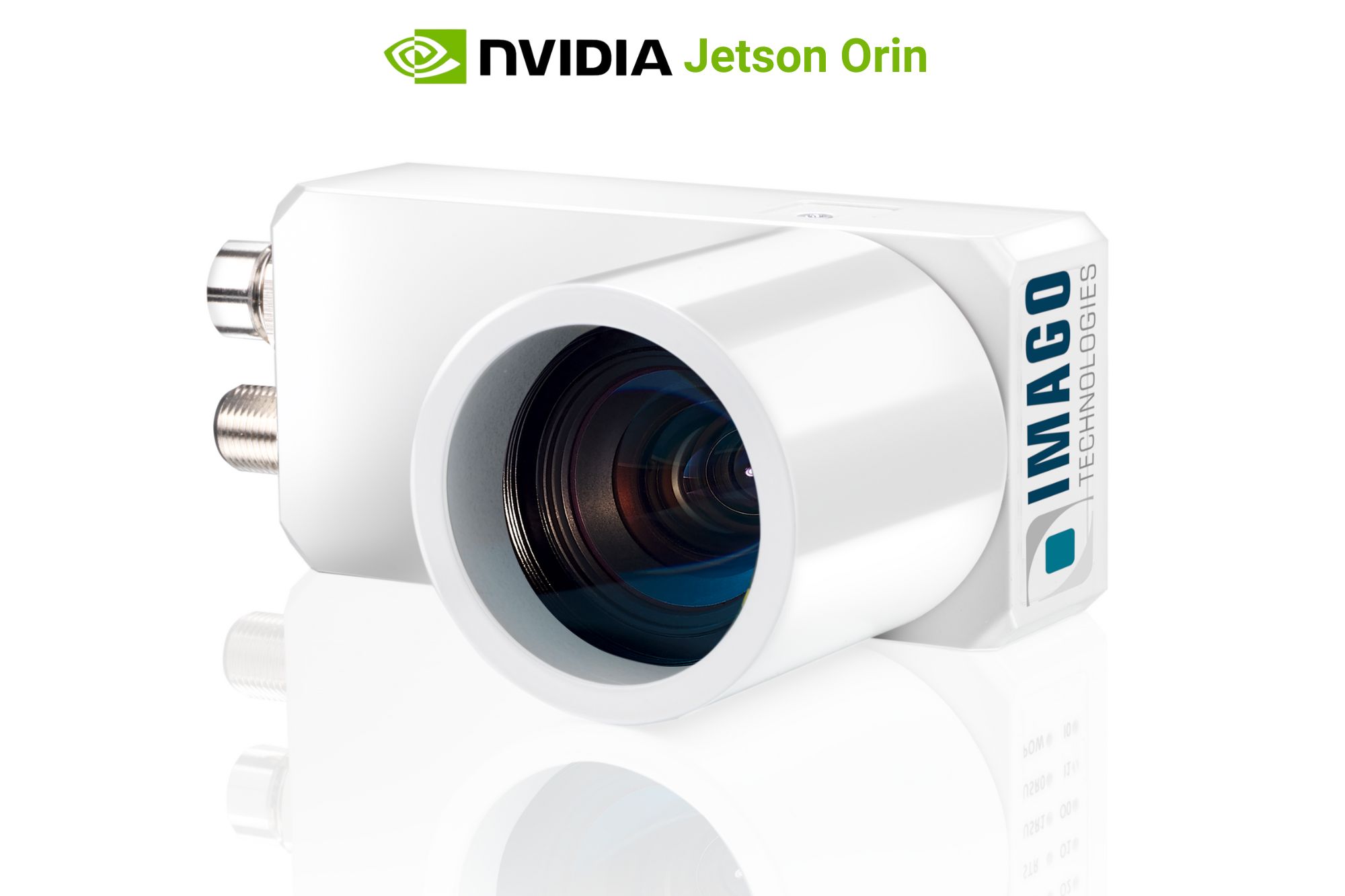
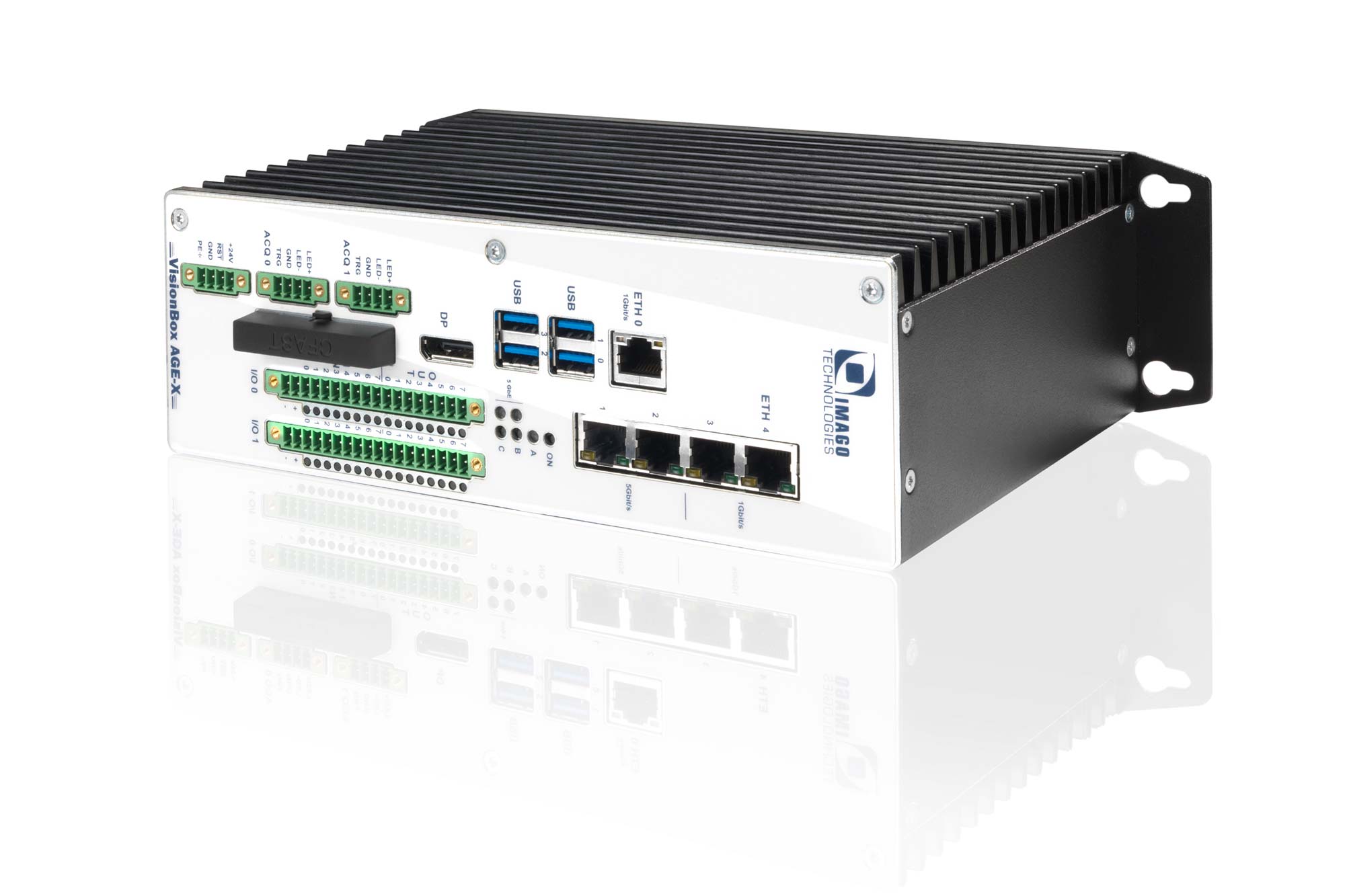
Reliably identify packages, containers, and codes at full conveyor speed.
Frequently Asked Questions
How reliably does the system read barcodes, Data Matrix codes, and printed text under real logistics conditions?
Packages, containers, and pallets move at high speed and often feature damaged labels, dirt, reflective wrapping films, or challenging viewing angles. Modern vision systems combine powerful image processing with AI-based algorithms to reliably capture codes and printed text even under difficult conditions. This reduces sorting errors and increases process reliability.
How does the system handle changing package sizes, packaging types, and shipment structures?
Logistics centers process a wide variety of cartons, mailing bags, containers, and pallets every day. AI-powered machine vision recognizes these variations without requiring extensive reconfiguration and adapts flexibly to changing objects. This allows new packaging types and logistics processes to be integrated quickly without redesigning the entire system.
Is the platform scalable enough for future automation and AI applications?
Logistics processes continue to evolve—from code reading and volume measurement to AI-based object recognition and robotic automation. An open, scalable vision platform enables additional cameras, new algorithms, and AI models to be integrated through software. This ensures long-term investment protection and allows the system to grow with increasing operational requirements.