


Prevent print defects, waste, and customer complaints by reliably inspecting print quality, registration, codes, and variable data at full web speed. Choose between a fully programmable vision platform or a ready-to-use solution.
Machine Vision for the Printing Industry

Typical Challenges in the Printing Industry
01
High Web Speeds and Continuous Operation
Printing presses process paper, film, and label webs at high speeds in continuous 24/7 production. This requires precise synchronization and ultra-fast inspection.
02
Print Quality and Registration Accuracy
Print defects, color deviations, and registration errors must be detected reliably to minimize waste and maintain consistent print quality.
03
Variable Data and Code Verification
Barcodes, Data Matrix codes, serial numbers, and human-readable text must be read and verified accurately to ensure traceability and product compliance.
04
Frequent Job and Format Changes
Different print layouts, substrates, and customer requirements demand flexible inspection systems that can quickly adapt to new production jobs.
Our Approaches
Two Paths to the Right Vision Solution
Depending on your integration requirements and project timeline, IMAGO offers two distinct approaches to printing inspection.
Open Plattform
Flexible Vision Platform
For OEMs (printing press and converting machine builders) and printing companies that require full control over application logic, system integration, and scalability.
- Freely programmable with the IMAGO ViewIT software framework, C++, Python, and HALCON – no black box, full control
- Multiple inspection tasks on a single device – for example print inspection, OCR, code reading, and registration control.
- Portable across all IMAGO devices, with OPC UA and REST connectivity for Industry 4.0 integration
- Long-term availability, including ODM (Original Design Manufacturer) variants for serial machine production
Ready to use
Preconfigured Solution
For users with a specific inspection challenge who need fast and reliable results without extensive in-house development.
- Deep-learning inspection of visually variable parcels and logistics objects without programming using a web-based GUI
- Fast deployment with minimal lead time and a clear focus on rapid time-to-market
- Reliably detects anomalies and natural product variations in shape, color, and surface appearance
- Consulting and support from the experienced IMAGO engineering team – robust hardware made in Germany
Decision Guide
What Is Your Goal?
Choose the approach that best fits your project – both lead to a reliable inspection solution.

Maximum Flexibility
You develop your own inspection solutions or integrate machine vision deeply into your printing or converting machinery.

Fast Implementation
You have a specific inspection task—such as OCR, or code verification—and need a ready-to-use system quickly.
Differentiation
Why IMAGO for the Printing Industry?
Hardware, software, and system integration work together to ensure reliable inline inspection and consistent print quality at high production speeds.

Open Software Framework
Freely programmable instead of a black box – full control over every inspection task on the line.

Multiple Tasks, One System
OCR, code reading, quality control, and AI inspection run on the same hardware instead of multiple systems.

Long-Term Availability
ODM variants and long product life cycles for serial machines and global rollouts.

Future-Proof Architecture
Scalable platform without vendor lock-in that grows with your requirements.

High-Speed-Vision
Hundreds of products per minute with processing power directly in the camera or box PC.
Applications
Typical Applications in the Printing Industry
IMAGO vision systems are used in these four application areas in the printing industry. This is only a small selection of what machine vision enables today.

Print Quality Inspection
Inspect printed images for color deviations, print defects, missing content, and registration errors to detect defects early and reduce waste.

Web and Surface Inspection
Continuously inspect paper, film, and label webs for defects, damage, contamination, or surface irregularities across the entire web width.

OCR, Barcode, and Code Reading
Reliably read and verify serial numbers, batch codes, barcodes, and Data Matrix codes using optical character recognition (OCR) to ensure quality and traceability.

Sheet Position and Alignment Inspection
Individual sheets are monitored for position, alignment, and transport accuracy to detect skew, double sheets, and misfeeds before they cause machine downtime or print defects.
Technology for Demanding Printing Applications
A high-performance machine vision system for the printing industry must combine high web speeds with continuous inline quality inspection. Printed images, registration marks, barcodes, and variable data must be inspected in real time without slowing production.
IMAGO provides the required processing power either directly inside the camera or externally in a high-performance box PC. Precise triggering, real-time I/O, and powerful line scan and area scan cameras enable reliable inspection throughout the entire printing process.
Print inspection, OCR, code reading, registration control, and defect detection run simultaneously within a single system. Thanks to the open software framework, new print jobs, substrates, and inspection tasks can be implemented quickly and flexibly. From traditional machine vision algorithms to GPU-accelerated AI, IMAGO provides the right hardware platform for every application.
Product recommendations
Recommended Solutions for the Printing Industry
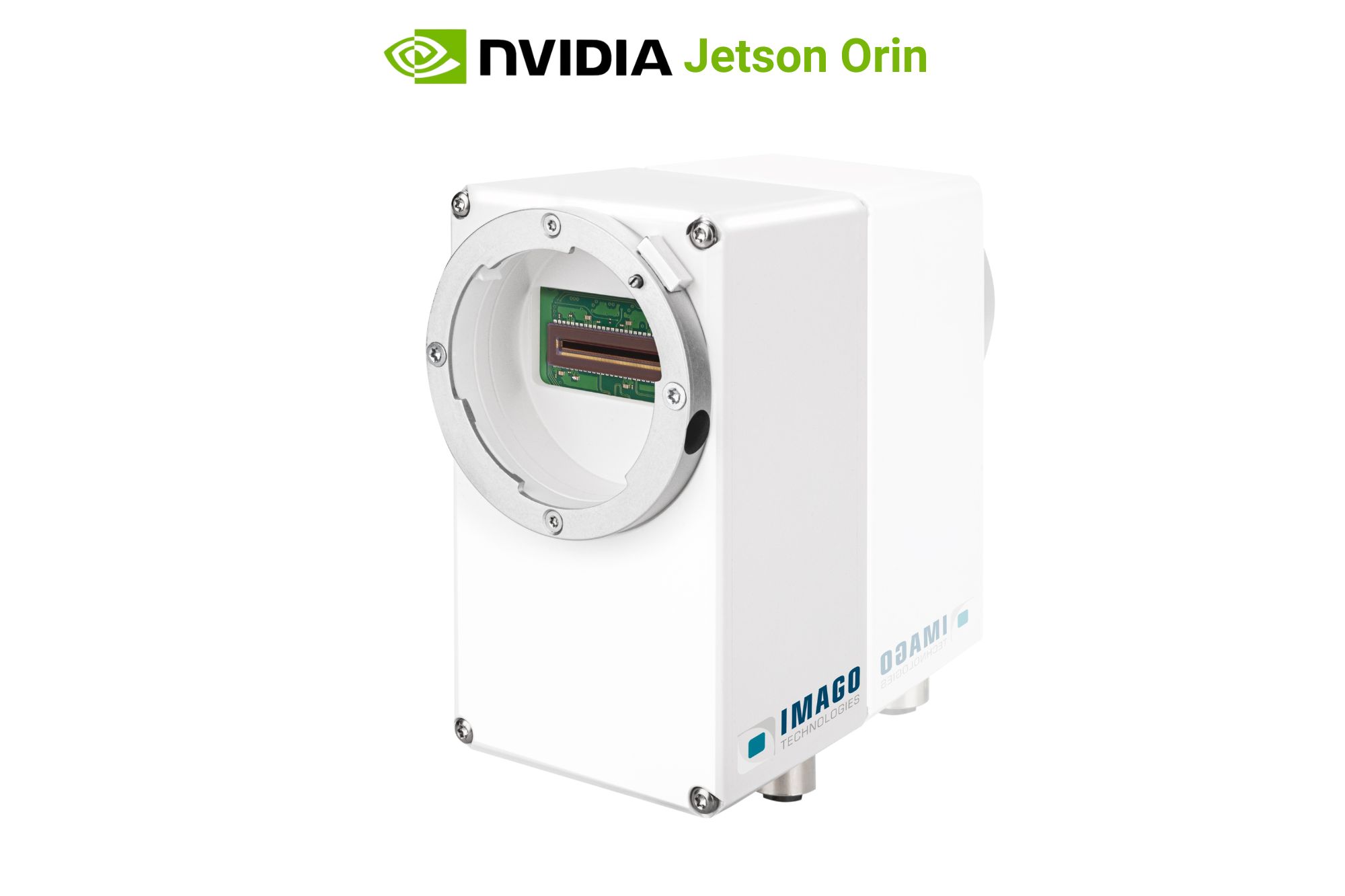
The following systems are specifically designed for demanding printing applications. They combine high-speed image acquisition, precise inspection, and flexible processing. Depending on your application, they can be fully programmed or deployed as ready-to-use solutions.

Inspect printed images, registration, codes, and variable data reliably at full web speed.
Frequently Asked Questions
How can print defects be detected reliably at full production speed?
Machine vision continuously inspects print quality and detects defects such as streaks, color variations, missing print, and registration errors in real time. Problems are identified immediately before large amounts of waste are produced.
How can variable data, codes, and printed content be inspected with 100% reliability?
Modern vision systems inspect serial numbers, barcodes, QR codes, Data Matrix codes, and printed content directly during the printing process. Incorrect or unreadable markings are detected, documented, and can trigger immediate corrective actions.
Is the platform scalable for higher resolutions, additional cameras, and AI applications?
As image resolutions increase and AI-based inspection becomes more sophisticated, processing requirements continue to grow. A scalable machine vision platform allows additional cameras, GPU acceleration, and new algorithms to be integrated without redesigning the machine architecture.