


Avoid mislabeling, scrap, and recalls – inspect codes, labels, and packaging reliably at full production speed. Freely programmable or available as a ready-to-use solution.
Machine Vision for the Food Industry

Typical Challenges in the Food Industry
01
High Throughput Rates and Continuous Operation
Food production lines process hundreds of products per minute in 24/7 operation. This requires precise triggering and fast response times.
02
Challenging Surfaces and Contrasts
Glossy films, reflections, and varying print quality make reliable reading of codes and expiration dates difficult.
03
Compliance and Traceability
Incorrect expiration dates, unreadable codes, or wrong allergen information can result in rejected batches, recalls, and liability risks.
04
Rigid Standard Systems
Closed systems cannot adapt to changing products, formats, and inspection tasks, limiting production flexibility.
Our Approaches
Two Paths to the Right Vision Solution
Depending on your integration requirements and project timeline, IMAGO offers two distinct approaches to food inspection.
Open Plattform
Flexible Vision Platform
Depending on your integration requirements and project timeline, IMAGO offers two distinct approaches to food inspection.
- Freely programmable with the IMAGO ViewIT software framework, C++, Python, and HALCON – no black box, full control
- Multiple inspection tasks on a single device – for example reading expiration dates and inspecting seal integrity
- Portable across all IMAGO devices, with OPC UA and REST connectivity for Industry 4.0 integration
- Long-term availability, including ODM (Original Design Manufacturer) variants for serial machine production
Ready to use
Preconfigured Solution
For users with a specific inspection challenge who need fast and reliable results without extensive in-house development.
- Deep-learning inspection of visually variable food products without programming using a web-based GUI
- Fast deployment with minimal lead time and a clear focus on rapid time-to-market
- Reliably detects anomalies and natural product variations in shape, color, and surface appearance
- Consulting and support from the experienced IMAGO engineering team – robust hardware made in Germany
Decision Guide
What Is Your Goal?
Choose the approach that best fits your project – both lead to a reliable inspection solution.

Maximum Flexibility
You develop your own inspection solutions or integrate machine vision deeply into your food or packaging machinery.

Fast Implementation
You have a specific inspection task – such as label verification or foreign object detection – and need a ready-to-use system quickly.
Differentiation
Why IMAGO for the Food Industry?
Hardware, software, and system integration work together to ensure stable processes in food production.

Open Software Framework
Freely programmable instead of a black box – full control over every inspection task on the line.

Multiple Tasks, One System
OCR, code reading, quality control, and AI inspection run on the same hardware instead of multiple systems.

Long-Term Availability
ODM variants and long product life cycles for serial machines and global rollouts.

Future-Proof Architecture
Scalable platform without vendor lock-in that grows with your requirements.

High-Speed-Vision
Hundreds of products per minute with processing power directly in the camera or box PC.
Applications
Typical Applications in the Food Industry
IMAGO vision systems are used in these four application areas within the food industry. This is only a small selection of what machine vision enables today.

Quality Control and Food Safety
Shape, size, and completeness of every product are inspected reliably. Foreign objects such as glass, metal, or plastic are detected safely and defective products are removed from the production line.

Packaging and Seal Inspection
Packaging presence, correct seal integrity, and properly fitted lids are monitored continuously, ensuring that leaking or open packages are rejected immediately.

Label Inspection, OCR, and Code Reading
Expiration dates, batch codes, and Data Matrix codes are read reliably using optical character recognition (OCR) and verified for dependable label quality assurance.

Completeness and Presence Verification
Missing components, empty positions, and absent inserts are detected reliably, ensuring that only complete and correctly assembled products proceed through the line.
Technology for Demanding Food Production Lines
A powerful machine vision inspection system for the food industry must combine speed with real-time performance. Processing hundreds of products per minute requires microsecond-accurate triggering, short exposure times, and synchronized lighting.
IMAGO provides the required processing power either directly in the camera or externally in a box PC, featuring an integrated Real-Time Communication Controller and real-time I/O for machine and PLC connectivity via OPC UA and REST API.
Undefined or rare defect patterns as well as the natural variability of food products often exceed the capabilities of rule-based inspection systems. AI and deep learning reliably recognize irregular shapes, colors, and surface characteristics while classifying natural product variations.
Processing is performed directly on the device using GPU acceleration – without an additional industrial PC and without slowing down production.
Product recommendations
Recommended Solutions for the Food Industry
The following systems are designed specifically for food industry requirements. They combine high speed, robust hardware, and flexible evaluation capabilities. Depending on the application, they can be freely programmed or deployed immediately.
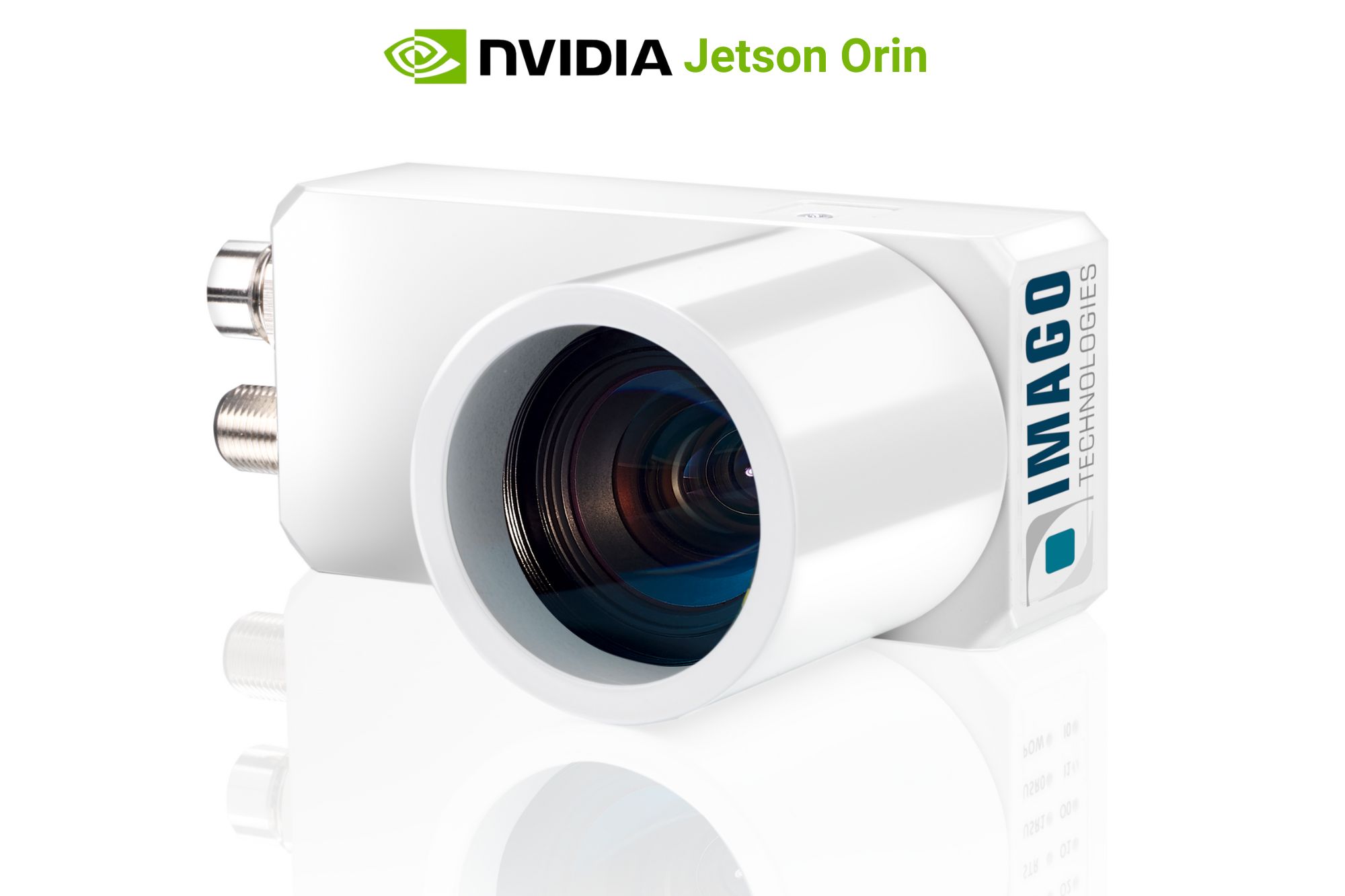
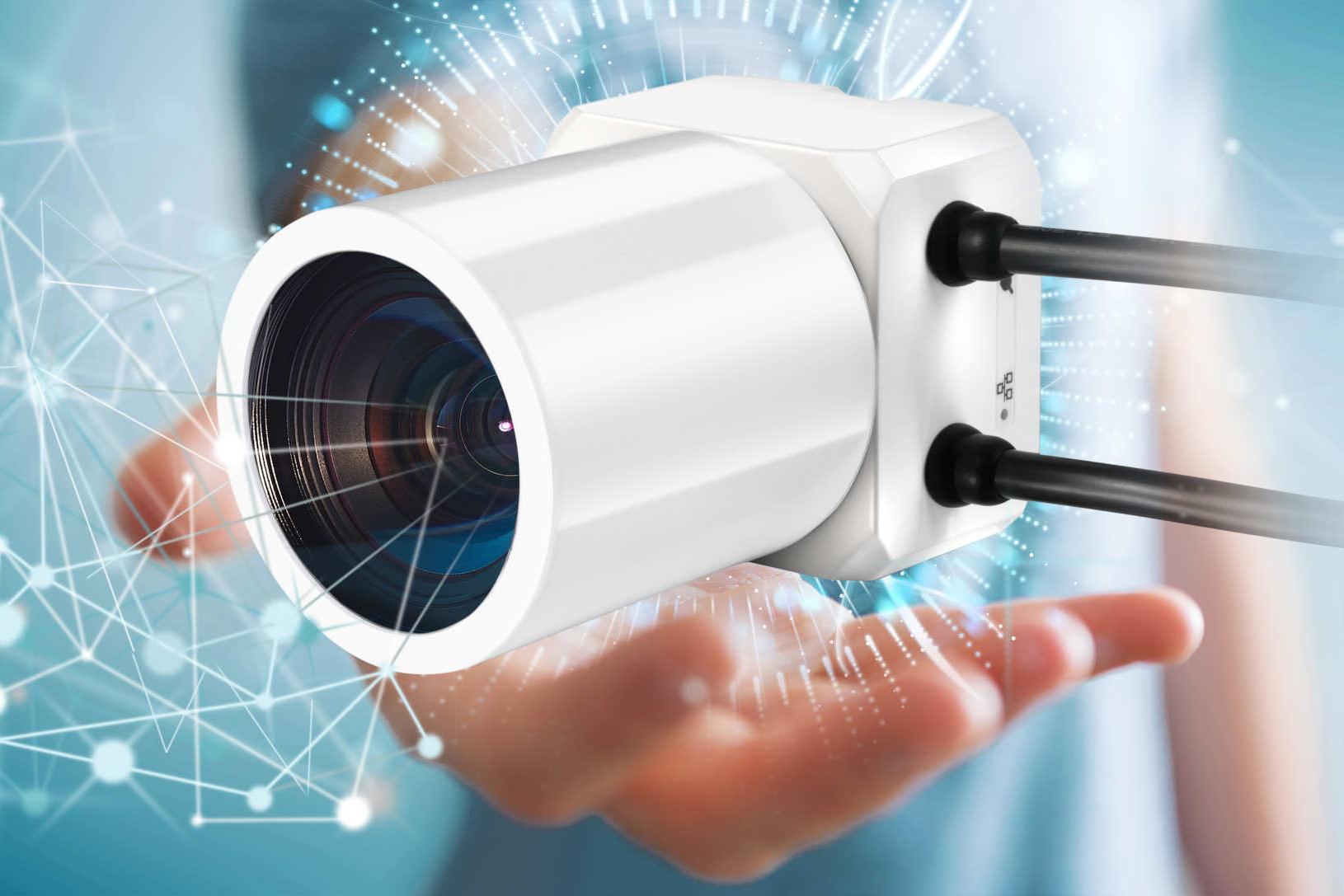
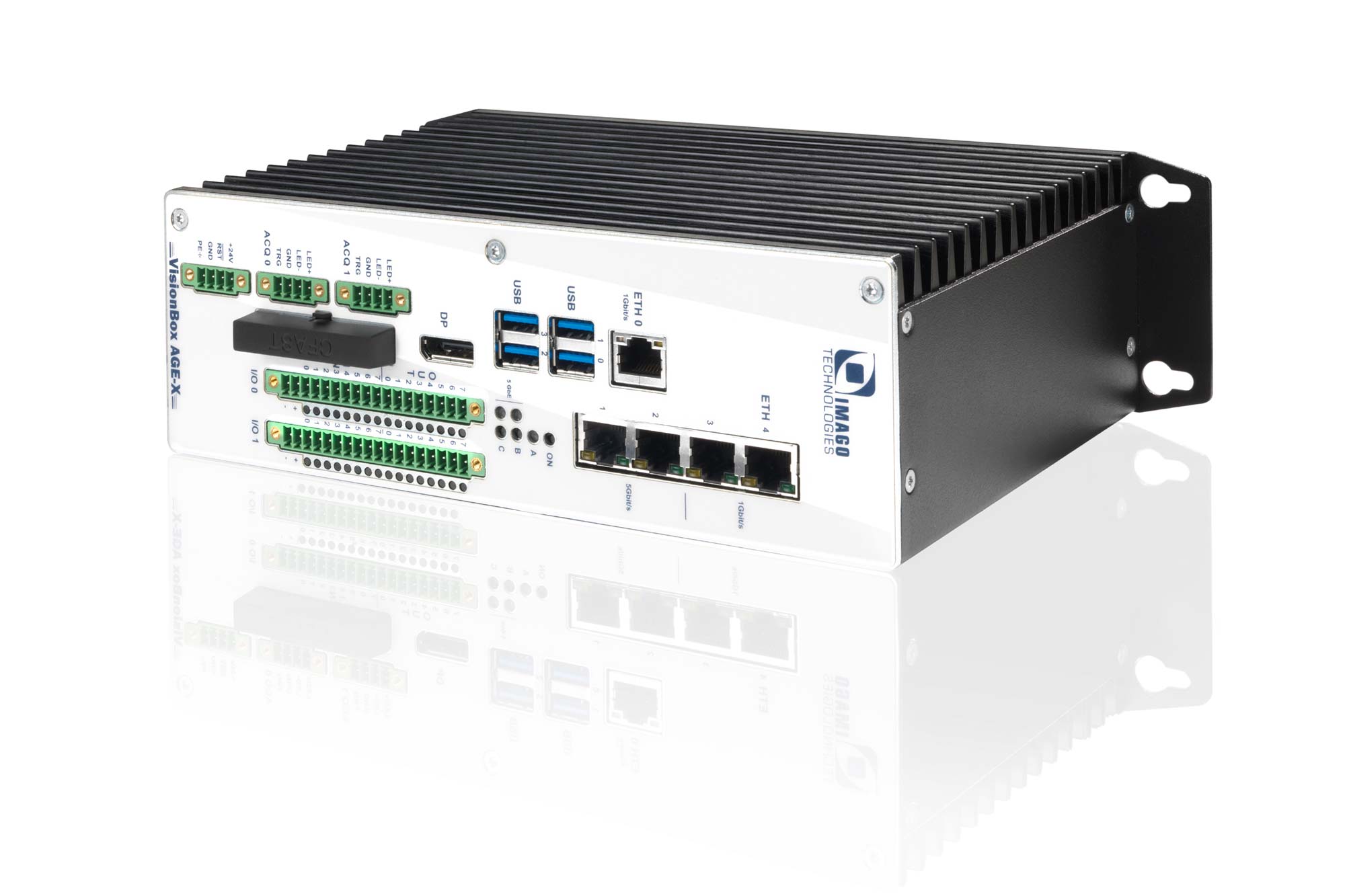
Inspect Food Products, Packaging, and Codes Reliably at Full Production Speed
FAQs about industrial cameras
How reliably does a machine vision system detect defects compared to manual inspection?
A machine vision system inspects every product inline rather than by sampling and operates 24/7 without fatigue. Unlike manual inspection, it detects even the smallest deviations consistently and documents every result completely. This reduces scrap and makes root causes traceable throughout the production line.
Can one system inspect different product variants and packaging formats?
Yes. Modern machine vision systems can inspect different bottle shapes, labels, closures, and packaging types using a single platform. Deep-learning technologies also recognize natural product variations and adapt more effectively to changing formats than rigid rule-based systems. This ensures reliable inspection quality even with frequent product changes and a high number of variants.
Why is traditional OCR often insufficient for reading expiration dates and codes?
Traditional OCR reaches its limits when printing quality varies due to glossy films, curved surfaces, or fluctuating inkjet print quality. Distorted or blurred characters may then be read unreliably, potentially resulting in incorrectly labeled batches. Deep-learning-based text recognition can reliably read such characters through learned pattern recognition. Learn more in our guide to label quality assurance.
How does an IMAGO system handle frequent product and format changes?
Frequent changes are handled efficiently because new products and inspection tasks are implemented through software rather than new hardware. Deep learning recognizes natural variations in shape, color, and surface characteristics, while the open platform can be reconfigured for new formats. This keeps production lines flexible even with changing product portfolios.