


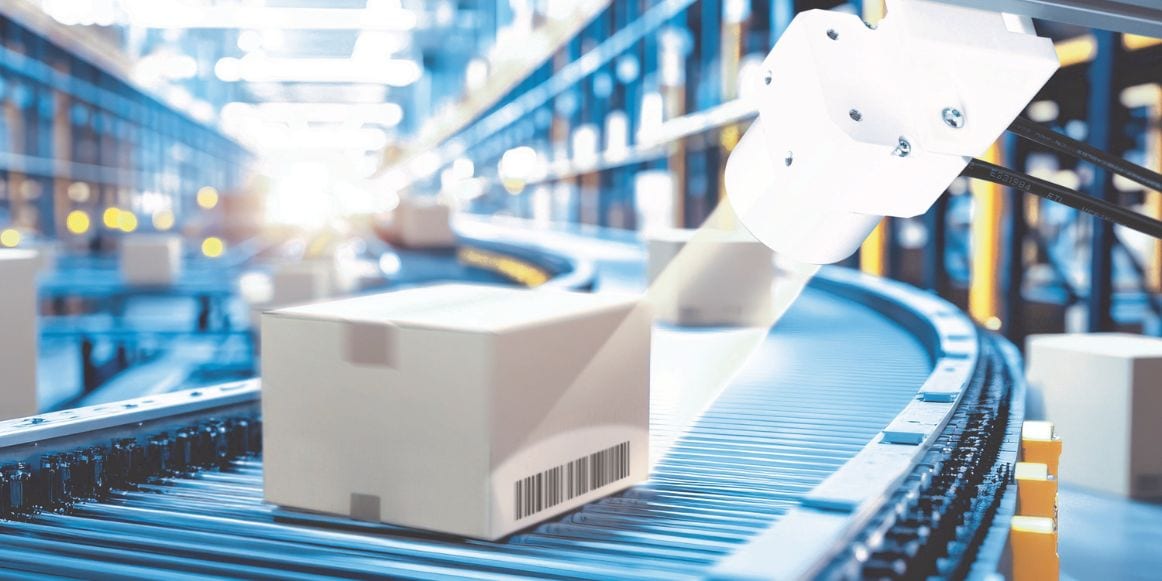


Automated logistics is becoming a key success factor for modern supply and distribution processes. Shorter delivery times, growing product diversity, the demand for reduced inventory levels, and labor shortages are putting pressure on companies to make logistics operations more efficient and reliable. Automated systems help control material flows precisely, reduce errors, and create transparent processes.
Especially in intralogistics — within warehouses, production facilities, and distribution centers — automation in logistics plays a crucial role. Technologies such as machine vision, intelligent sensors, and smart cameras enable automated decision-making throughout the supply chain, making automated logistics faster, more efficient, and more resilient.
Quick Overview
- Automated logistics increases efficiency and process reliability – visual inspection systems and automation technologies reduce manual intervention.
- Logistics automation improves transparency and traceability – products, parcels, and pallets can be identified and tracked seamlessly.
- Machine vision enables autonomous decisions in material flows – camera systems detect the position, condition, and labeling of goods.
- Smart cameras reduce integration complexity – compact systems combine camera, processor, and software for decentralized automation.
- Automated logistics forms the foundation of modern intralogistics systems – from automated warehouses to intelligent conveyor technology.
What is Automated Logistics?
Automated logistics refers to the use of technological systems to automatically control logistics processes. The goal is to handle goods movement, identification, sorting, and transport with minimal manual intervention. Modern solutions combine mechanics, sensor technology, software, and machine vision.
A key element of automation in logistics is the processing of visual information. Camera systems identify parcels, read codes, or determine product positions on conveyor belts and transmit this data directly to control systems.
Depending on the application, the level of logistics automation ranges from supporting individual process steps to largely automated logistics environments, such as goods receiving, warehouse and material flow control, order picking, or shipping operations. As a result, processes become faster, more stable, and more reliable.
Discover Vision Systems
Find the right vision hardware for your application – compact, powerful, and flexible. Discover IMAGO Technologies solutions for industrial machine vision.
Applications of Automated Logistics in Intralogistics
Logistics automation optimizes processes in warehouses and distribution centers by managing material flows efficiently, transparently, and without errors.
Automated logistics systems perform tasks such as goods identification, sorting, and transport control — supported by sensors, software, and machine vision.
Automated Goods Receiving Inspection
At the goods receiving stage, products must be identified, recorded, and documented quickly. Automation in logistics enables reliable and rapid inspection of incoming goods.
Camera systems capture barcodes, Data Matrix codes, or plain text information directly during unloading.
This automated identification ensures that every delivery is correctly registered in the system. At the same time, deviations such as incorrect labels or damaged packaging can be detected immediately. This allows errors to be identified early and downstream processes to remain stable.
Automated Warehouse and Conveyor Systems
Modern warehouses increasingly rely on automated conveyor and transport systems. Conveyor belts, sorting systems, and autonomous transport vehicles move goods independently through the warehouse.
Automated logistics enables precise control of these material flows.
Machine vision systems detect the position, orientation, and size of parcels or pallets. This information is used to control sorting mechanisms or robotic movements precisely, ensuring reliable operation even at high throughput rates.
Order Picking and Sorting
During order picking, products must be correctly identified and assembled. Logistics automation supports this process through visual identification and automated sorting systems.
Camera systems recognize items based on codes, labels, or visual features. Combined with robots or automated gripping systems, products can then be picked or sorted automatically. This reduces errors and accelerates the entire process.

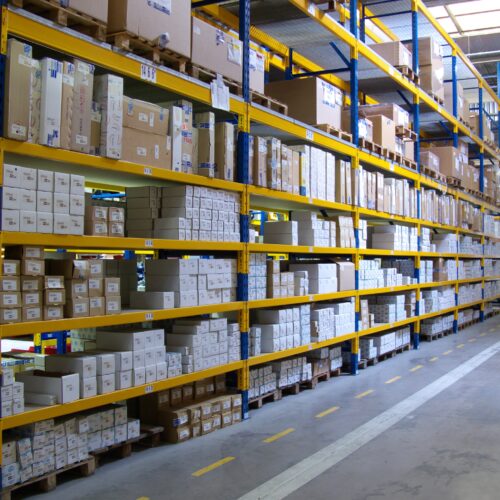
Track & Trace in Automated Logistics Systems
Traceability is a key element of modern supply chains. Automation in logistics enables complete documentation of all goods movements.
By continuously capturing codes or serial numbers, products can be tracked throughout the entire material flow. These data can be directly integrated into ERP or warehouse management systems, creating a transparent and traceable process chain.
The Role of Machine Vision in Logistics Automation
Visual sensing is a central component of modern logistics systems. Machine vision provides the information automated systems need to understand their environment and control processes reliably.
Cameras capture image data that is analyzed by software, for example to determine object positions, read codes, or identify specific features.
What Is a Smart Camera?
A smart camera combines a camera, processor, and image processing software within a single device. Image analysis takes place directly within the system — without the need for an external industrial PC.
This reduces latency and enables decisions to be made immediately at the point where data is captured.
Advantages of Smart Cameras in Intralogistics
The use of smart cameras provides several technical and economic advantages. Decentralized image processing increases speed and system stability.
Key advantages include:
-
compact design for limited installation space
-
reduced system complexity
-
lower latency
-
easy integration into existing systems
These characteristics are particularly important in dynamic logistics systems with high throughput rates.

Typical Applications of Smart Cameras in Warehouses
Smart cameras are used in intralogistics for a wide range of tasks and enable flexible and scalable automation in logistics.
Typical applications include:
-
code reading on conveyor belts
-
identification of parcels and pallets
-
control of sorting systems
-
support of robotic guidance systems
Thanks to their compact design, these systems can be integrated directly into existing installations.
Benefits of Logistics Automation for Industrial Companies
The use of modern automation technologies offers companies numerous operational and economic advantages. Logistics automation increases efficiency, transparency, and process reliability throughout the entire supply chain.
Consistent Process Quality |
Automated systems operate reproducibly and independently of human factors such as fatigue or subjective perception. This significantly reduces error rates and stabilizes logistics processes. |
Higher Throughput Rates |
Automated logistics enables faster identification, sorting, and transport of goods. As a result, throughput and processing speed increase — a decisive advantage for industries with high shipping volumes. |
Flexibility and Scalability |
Thanks to modular system architecture and standardized interfaces, image processing solutions can be quickly adapted to new requirements. This makes them especially suitable for changing product variants or smaller batch sizes—an advantage in customized manufacturing or frequent product changes, for example. |
Greater Supply Chain Transparency |
Automated processes continuously capture data about goods movements and process steps. This improves traceability and transparency across the entire supply chain. |
Data-Driven Process Optimization |
Systematic analysis of logistics data makes it possible to identify bottlenecks early and improve material flows. Companies gain valuable insights into their processes and can continuously optimize operations. |

Challenges of Automation in Logistics
Despite its many benefits, automation in logistics also presents technical challenges. Dynamic environments as well as different packaging types, materials, and lighting conditions place high demands on sensors and software.
To ensure reliable operation, machine vision systems require robust algorithms and careful system integration. Integrating automated systems into existing infrastructure also requires close coordination between mechanics, control technology, and machine vision.
The Future of Automated Logistics
Technological development in logistics is progressing rapidly. Automated logistics systems are becoming increasingly intelligent, connected, and flexible.
One key trend is the use of artificial intelligence to detect complex patterns and automate demanding inspection tasks. At the same time, edge computing is gaining importance: data processing takes place directly at the source — for example within smart cameras — enabling faster reactions and lower latency.
Why Automated Logistics Is Critical for Intralogistics
The demands placed on modern supply chains continue to increase. Faster delivery times, greater product variety, and global supply networks require efficient and transparent processes.
Automated logistics provides companies with a sustainable way to meet these challenges.
By using intelligent sensors, machine vision, and smart cameras, material flows can be monitored and controlled precisely. Automated systems identify products, analyze situations, and make decisions in real time.
As a result, logistics automation becomes a key building block for future-ready intralogistics systems, enabling more stable processes, lower error rates, and significantly greater scalability.
Increase Efficiency
Leverage powerful machine vision solutions that combine precision, speed, and scalability. IMAGO supports you with reliable technology for modern automation processes.
FAQs About Automated Logistics
What is automated logistics?
Automated logistics refers to the use of technical systems to automatically control logistics processes. Examples include automated conveyor technology, robotic systems, machine vision, and intelligent sensors. The goal is to make goods movements faster, more efficient, and less error-prone.
Which processes in intralogistics can be automated?
Many processes within a warehouse can be automated, including goods receiving, product identification, sorting, order picking, and shipping processes. Automated systems handle the transport, detection, and documentation of goods movements.
What role does machine vision play in automated logistics systems?
Machine vision enables automated systems to visually capture and analyze their environment. Cameras identify products, read codes, or determine object positions. This information is used to precisely control conveyor systems, robots, or sorting mechanisms.