


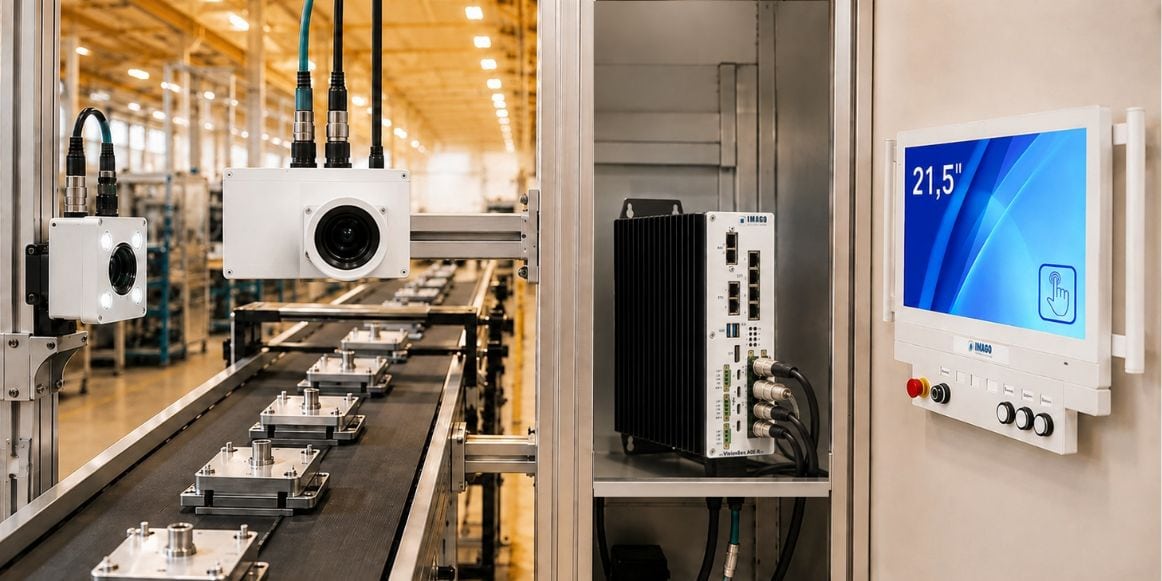


Embedded Vision is a key element of modern industrial machine vision. It enables image acquisition and processing directly within the system, reduces latency, and supports fast, real-time decision-making. With increasing digitalization and decentralized data processing, Embedded Vision is becoming increasingly important in factory automation, robotics, and quality control. This guide provides a comprehensive introduction to the technology and shows how companies can benefit from powerful Embedded Vision systems.
Quick Overview
- Decentralized image processing: Images are processed directly on the device, often eliminating the need for external industrial PCs.
- Real-time capability: Fast response times enable quick and reproducible decisions within the machine.
- Compact system architecture: Camera, processor, and software work together in a space-saving overall system.
- Wide range of applications: Numerous industries benefit from Embedded Vision, from quality control and robotics to logistics and packaging.
- Future-ready: AI, deep learning, and edge computing continuously expand the possibilities.
What Is Embedded Vision?
Embedded Vision refers to the integration of intelligent image processing directly into an embedded system. Camera, processing unit, and software work together as a self-contained unit, analyzing image data directly where it is generated. Unlike conventional machine vision solutions, captured images are not first transferred to an external computer but are processed immediately.
This decentralized architecture reduces communication paths, minimizes latency, and enables fast responses to changes in the production process. This is a decisive advantage, particularly in applications with high cycle rates or safety-critical requirements. At the same time, network load is reduced because often only inspection results or relevant process data need to be transferred to higher-level systems.
Discover Embedded Vision Systems
Find the right Embedded Vision solution for your application – compact, powerful, and designed for industrial requirements. Discover the IMAGO Technologies product portfolio.
An Embedded Vision system typically consists of several coordinated components. These include the industrial camera, image sensor, processing unit, suitable interfaces, and powerful image processing software. Only the precise interaction of all components ensures reliable and reproducible image recognition under industrial conditions. System integration therefore plays a decisive role in the performance of an Embedded Vision solution.
How Does Embedded Vision Work?
The performance of Embedded Vision results from the close interaction between specialized hardware and intelligent software. The aim is to evaluate image data immediately after acquisition and derive actionable decisions within milliseconds. This makes it possible to automate production processes, detect defects at an early stage, and precisely control machines.
Image Acquisition and Data Processing
Every Embedded Vision system starts with image acquisition using an industrial camera or Vision Sensor. Depending on the application, surfaces, components, packaging, or codes are captured at high resolution and speed. Analysis of the captured image data then begins immediately.
Processing takes place directly within the embedded system. Algorithms can, for example, detect contours, measure distances, identify surface defects, or read barcodes and Data Matrix codes. Because all calculations are performed locally, response times are extremely short. This enables the direct control of robots, conveyor systems, or sorting systems.
Hardware, Processors, and Integrated Computing Power
Embedded Vision systems combine image sensors, processors, and communication interfaces in a compact hardware platform. Depending on the performance requirements, different processor architectures optimized specifically for industrial machine vision are used. Modern systems combine high computing performance with low energy consumption and fanless operation.
IMAGO takes a modular approach to Embedded Vision components. The portfolio ranges from freely programmable Vision Sensors and Smart Cameras to powerful Embedded Vision computers for particularly compute-intensive applications. This modular architecture makes it possible to tailor the system precisely to different industrial requirements without providing unnecessary hardware resources.
Software and AI Support
The right software transforms powerful hardware into a complete Embedded Vision system. It controls image acquisition, executes image processing algorithms, and manages communication with machine controllers and higher-level systems.
In addition to classical methods for feature and contour detection, AI-based approaches are becoming increasingly important. Deep learning models can identify complex defect patterns that are difficult to describe using fixed rules. At the same time, modern development environments significantly simplify the creation and maintenance of machine vision applications. The combination of embedded hardware and intelligent software creates powerful vision systems for demanding industrial applications.
Applications of Embedded Vision
Embedded Vision is used across numerous industrial sectors. The technology enables decentralized image processing directly within the machine, supporting fast and reliable real-time decisions. Whether in quality control, robotics, or logistics, Embedded Vision systems can be flexibly adapted to different applications and help increase the efficiency of industrial processes.
Quality Control and Defect Detection
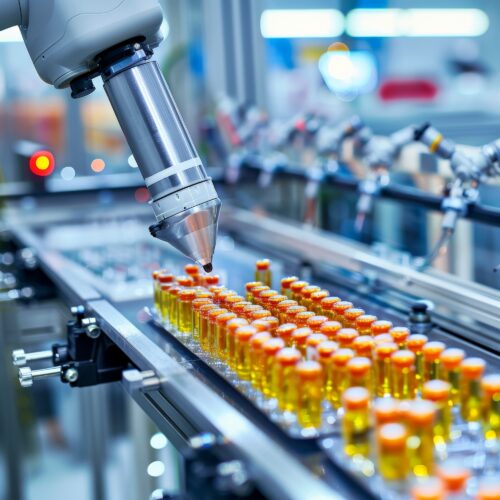
Embedded Vision automates visual inspection tasks directly within the production line. Surface defects, dimensional deviations, or defective components are detected in real time, helping to reduce scrap and ensure product quality.
In the pharmaceutical industry, for example, blisters and packaging are inspected for completeness and quality defects. In the food industry, Embedded Vision enables the inspection of packaging, labels, and markings directly within the production line. This allows defects to be detected at an early stage and product quality to be reliably ensured.
Robotics and Factory Automation
In robotics and factory automation, Embedded Vision provides the image information required for the precise control of automated processes. Cameras capture the position, location, or orientation of workpieces and provide this information directly to the machine controller.
Local data processing reduces response times and improves the dynamics of automated processes. This enables precise robot movements and efficient production processes.

Mobile Machines and Autonomous Systems
Embedded Vision also plays an important role in autonomous vehicles, automated guided vehicles, and mobile robots. These systems continuously capture their surroundings and process image data directly on site.
Processing without an external computing unit keeps latency low and enables decisions to be made in real time. This increases reliability, particularly in dynamic applications.
Edge Computing
With edge computing, image data is processed directly within the Embedded Vision system. This reduces latency, relieves network infrastructure, and enables reliable real-time applications.
Benefits of Embedded Vision
More and more tasks are being performed not centrally, but directly at the source of data generation. Embedded Vision systems combine camera and computing unit in a compact device. This reduces latency and can lower costs.
Such systems are particularly suitable for applications with limited installation space or where real-time data is required without network delays – for example, in autonomous transport systems, mobile robots, or connected production cells.
Challenges of Embedded Vision
Despite its advantages, the development of Embedded Vision systems places high demands on both hardware and software. Computing power, energy consumption, and installation space must be optimally balanced to ensure reliable image processing under industrial conditions.
The selection of suitable cameras, processors, and software components also influences the performance of the overall system. Careful system design is essential to ensure that Embedded Vision can be used reliably and economically over the long term.
Trends and the Future of Embedded Vision
The requirements for industrial machine vision continue to evolve. Embedded Vision systems must combine high computing performance with compact designs and fast response times. Artificial intelligence and decentralized data processing are expanding the possibilities for automated inspection and control tasks.
AI and Deep Learning on Embedded Systems
Artificial intelligence (AI) and deep learning enable complex image data to be analyzed directly within the embedded system. They are particularly suitable for inspection tasks in which defect patterns or product characteristics vary and are difficult to describe using fixed rules.
Running AI models locally combines intelligent image analysis with fast response times. This allows Embedded Vision systems to make decisions directly at the machine and automate even demanding inspection tasks.
Edge AI and Intelligent Cameras
Edge AI combines artificial intelligence with data processing directly at the point where the data is generated. Image data therefore does not first need to be transferred to a central computing unit but can be evaluated immediately.
Intelligent cameras combine image acquisition and computing power in a compact system. This reduces communication paths and enables decentralized vision applications with fast response times.
Connected Embedded Vision Systems in Industry 4.0
In connected production environments, Embedded Vision systems not only perform inspection tasks but also provide relevant process data. This information can be used to control and monitor automated processes.
The combination of local image processing and industrial communication provides the foundation for flexible automation concepts. Compute-intensive image data is processed locally, while relevant results are selectively transferred to higher-level systems.
Integrate Embedded Vision
Choose compact Embedded Vision solutions that bring powerful image processing directly into the machine. IMAGO provides the right technology for your industrial application.
Why Embedded Vision Is Worthwhile for Industrial Companies
Embedded Vision combines compact hardware with powerful image processing directly within the machine. Decentralized processing supports fast response times and enables space-saving integration into industrial applications. This results in tangible benefits for automated inspection, identification, and control tasks:
Fast response times |
Image data is processed directly within the Embedded Vision system. Short communication paths reduce latency and enable fast decisions within automated processes. |
Compact integration |
Camera, computing unit, and software can be integrated into machines and systems while requiring minimal installation space. The compact system architecture is particularly suitable for applications where space is limited. |
Decentralized data processing |
Compute-intensive image data can be processed locally before relevant results are transferred to higher-level systems. This reduces network load and moves processing closer to the application. |
System integration instead of individual components |
For industrial applications, the coordinated interaction between camera, computing power, software, and interfaces is becoming increasingly important. Holistically designed Embedded Vision systems simplify integration and enable reliable image processing within the respective machine environment. |
FAQs About Embedded Vision
What Is the Difference Between Embedded Vision and Conventional Machine Vision?
In conventional machine vision systems, a separate computer often processes the camera data. Embedded Vision integrates the required computing power closer to the image acquisition process or directly into the system. This creates compact solutions with short communication paths that can be specifically integrated into machines and production systems.
Which Applications Are Particularly Suitable for Embedded Vision?
Embedded Vision is suitable for industrial applications in which image data needs to be processed quickly and directly. Examples include quality control, identification, robotics, and automated production processes. The compact system architecture offers particular advantages where installation space is limited and fast response times are required.
What Role Does AI Play in Embedded Vision?
Artificial intelligence expands Embedded Vision with methods for analyzing complex and variable image features. Deep learning models can, for example, be used for inspection tasks that are difficult to implement using predefined image processing rules. AI therefore enables more flexible image analysis directly within powerful embedded systems.
Related Articles

Material Flow Analysis with AI and omlox
Read More
Embedded Vision
Read More
Image Sensor: How It Works, Sensor Types, and Its Role in Industrial Machine Vision
Read More
Physical AI in Industrial Machine Vision
Read More
Machine Vision Lighting
Read More
GPU Expansion in Industrial Image Processing
Read More
Automated Logistics
Read More
New Software Functionalities for the Industrial Dashcam
Read More