


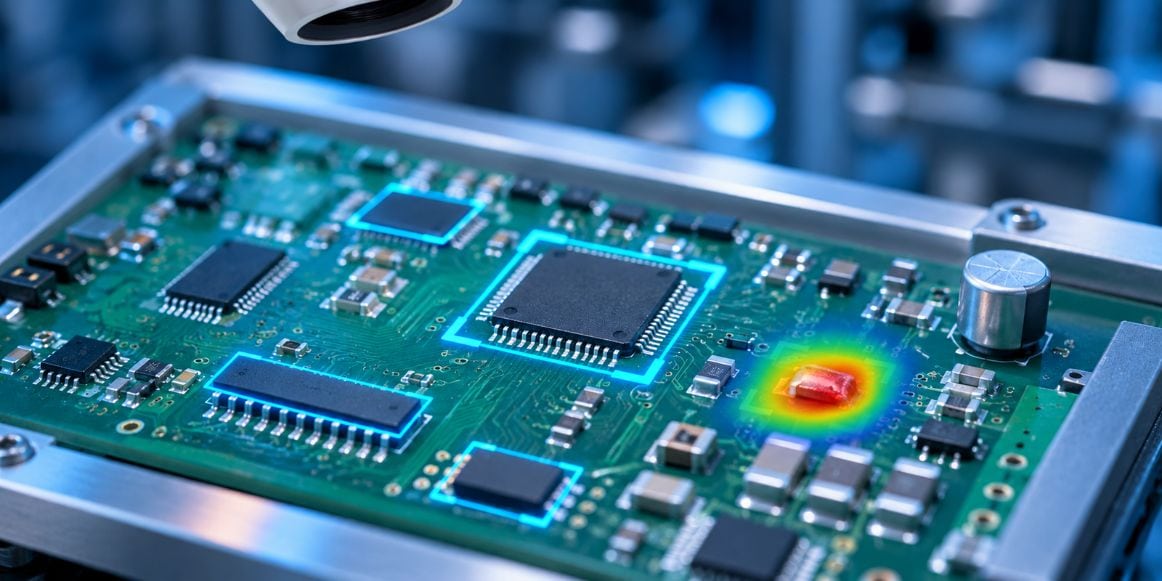


Artificial intelligence opens up new possibilities in industrial machine vision. However, not every inspection task requires neural networks. While deep learning excels at complex defect patterns and variable products, classical machine vision often remains the more economical choice. The key question is which technology solves the inspection task reliably and cost-effectively. This guide explains the differences, shows when AI is worthwhile, and explores the benefits of hybrid solutions.
Quick Overview
- Technology selection: Classical machine vision is suitable for clearly defined inspection features, while deep learning is effective for complex and variable defect patterns.
- Requirements: AI also requires clear quality criteria, suitable image data, and careful validation.
- Range of applications: Classification, object detection, and anomaly detection support different inspection tasks.
- Economic viability: In addition to detection performance, factors such as data requirements, integration costs, incorrect decisions, and maintenance must be considered.
- Hybrid solutions: Combining AI with classical algorithms brings together flexibility, precision, and efficiency.
- Outlook: Physical AI extends machine vision to include intelligent decisions and actions in connected machines
- Classical Machine Vision or Deep Learning?
- Suitable Inspection Tasks for Each Technology
- Process Knowledge and Training Data
- Deep Learning Methods for Defect Detection
- Technical and Organizational Requirements
- Economic Viability of Deep Learning
- Hybrid Machine Vision: AI and Classical Algorithms
- Physical AI: The Future of Industrial Machine Vision
- Conclusion: Choosing the Right Technology
- FAQs About Deep Learning in Machine Vision
Classical Machine Vision or Deep Learning: What Is the Difference?
Classical machine vision and deep learning pursue the same fundamental goal: extracting information from image data for quality control or process control. The main difference lies in how the systems identify and evaluate relevant image features.
While classical methods work with defined algorithms and thresholds, deep learning models learn relationships from image examples. The most suitable approach depends primarily on the inspection task, product variability, and the available data.
Find the Right Vision Solution
Whether you need classical machine vision, deep learning, or a hybrid approach, discover IMAGO Technologies’ flexible hardware and software solutions for your application.
How Does Classical Machine Vision Work?
In classical machine vision, inspection features are described using predefined rules. Algorithms analyze contours, colors, distances, or geometric structures, for example. The results are then compared with defined references and tolerances.
A typical method is pattern matching, in which a system locates predefined patterns within an image. This can be used to determine the position and orientation of a component. Dimensional inspection, presence checks, and the reading of standardized codes are also common applications.
The main advantage is traceability. If a component exceeds a defined dimensional tolerance, the system can decide whether it is acceptable based on a specific threshold. Such rule-based inspection decisions are particularly useful when features can be clearly described and imaging conditions remain stable.
How Does Deep Learning Work in Machine Vision?
Deep learning is a subfield of machine learning based on artificial neural networks. Unlike classical algorithms, relevant image features are not exclusively programmed manually. Instead, the model learns from suitable training images which visual characteristics are important for a particular decision.
This approach is particularly useful when defects are difficult to describe using fixed rules. Variable surfaces, irregular structures, and changing appearances can be analyzed using learning-based methods without having to program every possible deviation individually.
After training, the model is applied to new image data. This process is called inference. IMAGO offers intelligent cameras and vision computers that can run neural networks directly on the device. Depending on the system, processing can therefore take place locally without transferring every image to an external computer or the cloud.
Which Inspection Tasks Are Suitable for Which Technology?
The suitability of a technology cannot be assessed solely on the basis of its performance. The key factors are how clearly an inspection feature can be described and how much the appearance of the products varies.
| Classical Machine Vision | Deep Learning |
|---|---|
| Defined dimensions and tolerances | Complex defects that are difficult to describe |
| Position and orientation checks | Classification of variable products |
| Presence and completeness inspection | Anomaly detection on structured surfaces |
| Codes with clearly defined contours | Difficult-to-read or damaged characters |
| Stable imaging conditions | More variable image content |
| Rule-based decisions | Data-driven pattern recognition |
One example is optical character recognition, or OCR. Under controlled conditions, classical methods can reliably read standardized characters. For damaged, distorted, or low-contrast characters, Deep OCR based on neural networks may offer advantages.
However, deep learning cannot compensate for unsuitable image acquisition. A trained model still requires sufficient contrast, appropriate resolution, and usable image information. Choosing AI therefore always begins with a detailed analysis of the inspection task.

What Role Do Process Knowledge and Training Data Play?
AI-based inspection systems also require human expertise and clear quality criteria. In classical machine vision, rules and thresholds are programmed. Deep learning instead uses selected image examples to learn which characteristics distinguish acceptable products from defective ones.
The quality of the training data is crucial. It must represent relevant product variants, acceptable deviations, and different imaging conditions. The required amount of data depends on the application. The IMAGO Vision Cam AI.go, for example, enables users to implement certain AI inspection tasks with around ten sample images.
Careful validation remains essential to verify detection performance under real production conditions. New product variants or changing conditions may require the model to be reviewed and adjusted.
Which Deep Learning Methods Are Suitable for Industrial Defect Detection?
Deep learning is not a single algorithm. It encompasses different methods for evaluating image data. These methods differ in the information they provide and the training data they require.
Classification, object detection, and anomaly detection are particularly relevant to industrial machine vision. The right choice depends on whether a product needs to be assigned to a category, a defect needs to be localized, or an unknown deviation needs to be detected.
Classification: Categorizing Products and Defects
In classification, a neural network assigns an image to a predefined category. This may involve distinguishing between acceptable and defective products. Multiple product variants or different defect classes can also be separated in this way.
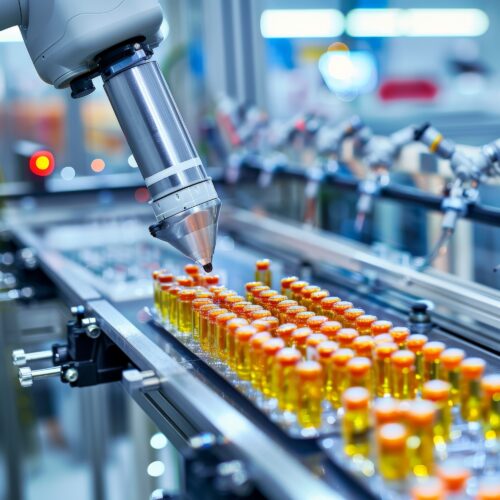
On a packaging line, for example, a classification model could identify whether packaging is printed correctly, damaged, or assigned to the wrong product variant. The categories are defined before training and represented by suitable image examples.
The strength of classification lies in evaluating the overall image content. It is therefore particularly suitable for tasks in which the required decision does not depend on precise geometric measurement. If the exact position of a defect also needs to be determined, additional methods are required.
Object Detection: Detecting and Localizing Defects
Object detection goes beyond simple image classification. It determines both which objects or features are present and where they occur within the image. Rectangular bounding boxes can be used for this purpose, for example.
In an assembly system, object detection can determine whether specific components are present and where they are located. Individual defects can also be localized if the model has been trained to recognize the relevant features.
The additional position information is particularly valuable for downstream automation. Detected objects can be processed selectively, while defective products can be rejected. Precise dimensional inspection may still require an additional geometric evaluation.

Anomaly Detection: Identifying Deviations From the Normal State
In anomaly detection, a model learns the visual characteristics of a defined normal state. New images are then analyzed to determine whether they contain noticeable deviations from that state.
This method is particularly suitable when not all possible defect types are known in advance. Films, textiles, and other structured surfaces may exhibit many different kinds of damage whose exact appearance is difficult to describe comprehensively.
One key advantage is that certain anomaly detection methods can initially be trained primarily with images of acceptable products. However, not every detected deviation is automatically a quality defect. Acceptable variations in the material may also be classified as anomalies.
Detection thresholds and the actual relevance of identified anomalies must therefore be evaluated carefully. A robust industrial inspection process is only achieved when the model can distinguish sufficiently reliably between acceptable variation and critical deviation.
Edge AI
Edge AI refers to running AI models directly on local devices such as smart cameras or industrial PCs. Image data is analyzed without a cloud connection. This enables short response times and reliable processing directly in production.
What Technical and Organizational Requirements Does Deep Learning Have?
A reliable deep learning application requires more than a trained AI model. The camera, lens, illumination, computing hardware, and software must work together. The entire machine vision process, including AI evaluation, must be completed within the required cycle time.
The required computing power depends on image resolution, model complexity, and inspection speed. Edge AI enables local AI processing directly on devices such as the IMAGO Vision Sensor PV4. Powerful industrial PCs and scalable AI platforms are available for more demanding applications.
In addition to technical integration, validation and ongoing model maintenance are essential. New product variants or changing production conditions may require adjustments. Clear responsibilities, suitable training data, and a flexible software environment such as IMAGO ViewIT support reliable long-term operation.
When Is Deep Learning in Machine Vision Economically Viable?
Deep learning is particularly worthwhile when classical machine vision cannot solve complex inspection tasks reliably or can only do so with considerable effort. In addition to detection performance, investment costs, training data, integration, and ongoing model maintenance must be considered.
The economic benefit comes from reducing scrap and rework and preventing defective products from being shipped. Both undetected defects and products that are incorrectly rejected must be taken into account.
Consider the following example: A company produces one million units per year. Reducing the scrap rate from 0.1 to 0.01 percent prevents 900 units from being scrapped. At €20 per unit, this corresponds to annual gross savings of €18,000.
For a well-founded decision, companies should consider the total cost over the system’s service life and test classical and AI-based solutions under comparable production conditions.
Inference
Inference is the process in which a trained AI model evaluates new image data. The model detects defects or deviations from the normal state. To conserve resources, an optimized, streamlined version of the original model can be used. Inference time determines the speed of the analysis.
Hybrid Machine Vision: Why Combining AI With Classical Algorithms Works
Hybrid machine vision combines the strengths of deep learning and classical algorithms. AI identifies complex defect patterns and natural variations, while rule-based methods perform precise measurements and clearly defined inspection tasks. Each technology can therefore be applied where it provides the greatest benefit.
An IMAGO application demonstrates the advantages of this approach in the quality inspection of coffee cups. The Vision Cam AI.go combines AI-based anomaly detection with classical HALCON operators. While AI inspects the inside of the cup for contamination, its circumference is measured using rule-based machine vision.
This targeted division of tasks enables flexible and precise quality control without having to implement every inspection step using neural networks.
Physical AI: How Is Industrial Machine Vision Evolving?
Physical AI combines artificial intelligence, machine vision, and sensor technology, enabling machines to perceive their environment and respond according to the situation. Combining data from different sensors creates new possibilities for autonomous robots and adaptive production systems.
Machine vision is therefore evolving from a pure quality inspection technology into an important component of intelligent process control. Cameras provide visual information that can be combined with other sensor data to support decisions and physical actions.
Language models and generative AI also create new possibilities, including the natural-language configuration of inspection tasks. However, image analysis and result validation remain essential. The goal is to create flexibly configurable systems that increasingly combine perception, evaluation, and action.
The Right Machine Vision Solution Starts With the Right Technology Decision
Deep learning opens up new possibilities for industrial quality control, particularly for complex defect patterns and variable products. However, AI is not the best choice for every application. The inspection task, data quality, technical requirements, and economic viability are the deciding factors.
Classical machine vision excels at clearly defined features, while hybrid systems make it possible to combine AI with rule-based algorithms selectively.
Determining the right technology requires a thorough analysis of the application. IMAGO Technologies offers flexible cameras, vision computers, and software platforms that support both classical and AI-based inspection methods.
Increase Productivity
Choose flexible machine vision solutions that combine classical algorithms and deep learning effectively. IMAGO provides the right technology for your inspection task.
FAQs About Deep Learning in Machine Vision
When Is Deep Learning Better Than Classical Machine Vision?
Deep learning offers advantages for complex and variable inspection features that are difficult to describe using fixed rules. Examples include irregular surface defects and natural variations in materials. For precise measurements, clearly defined contours, and stable inspection conditions, classical machine vision is often the simpler and more economical solution.
How Many Training Images Does Deep Learning Require?
The required number of training images depends on the application. Key factors include the complexity of the inspection task, the range of product variants, and the model being used. The IMAGO Vision Cam AI.go enables certain applications to be implemented with around ten sample images. However, additional independent image data may be required for reliable industrial validation.
Can Deep Learning Detect Unknown Defects?
Anomaly detection can identify deviations from a trained normal state without requiring every type of defect to be described individually in advance. This is particularly useful for irregular surfaces or unpredictable defects. However, it is necessary to determine whether the detected deviations are actual quality defects or fall within the acceptable range of product variation.
Ähnliche Artikel

Deep Learning in Image Processing
Read More
Material Flow Analysis with AI and omlox
Read More
Embedded Vision
Read More
Image Sensor: How It Works, Sensor Types, and Its Role in Industrial Machine Vision
Read More
Physical AI in Industrial Machine Vision
Read More
Machine Vision Lighting
Read More
GPU Expansion in Industrial Image Processing
Read More
Automated Logistics
Read MoreAutomated Logistics
Read More
New Software Functionalities for the Industrial Dashcam
Read More